

Marketing
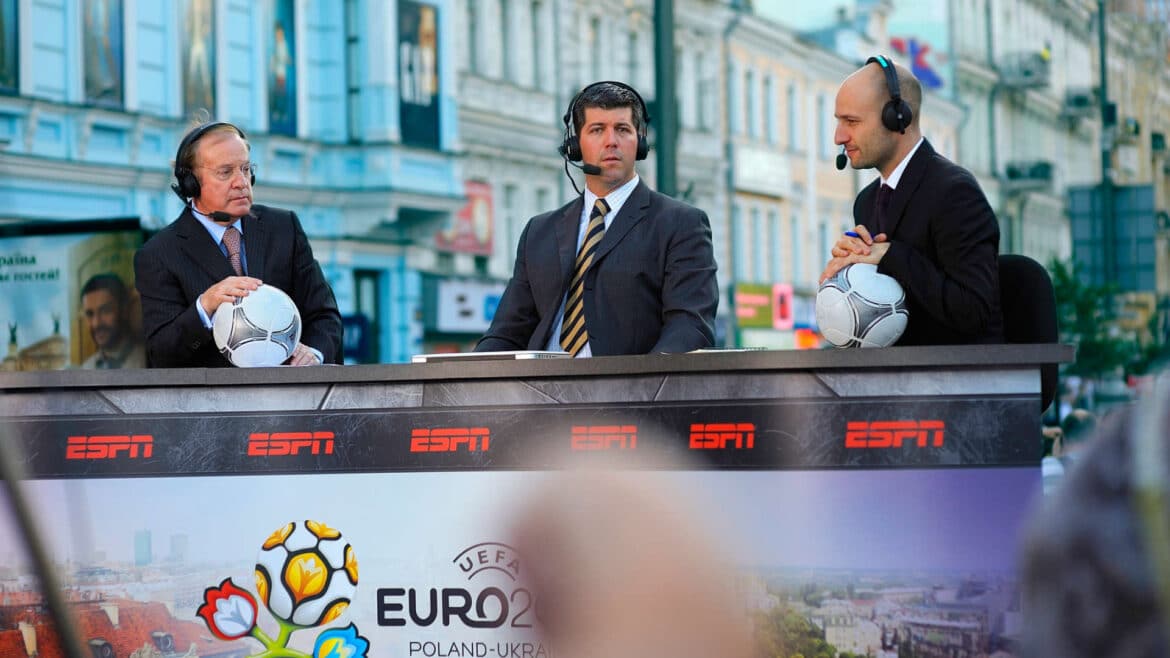
The Screen Changed Everything
What Football Lost When It Left The Stadium
(And What Your Business Lost When You Left The Floor)
The Armchair Expert
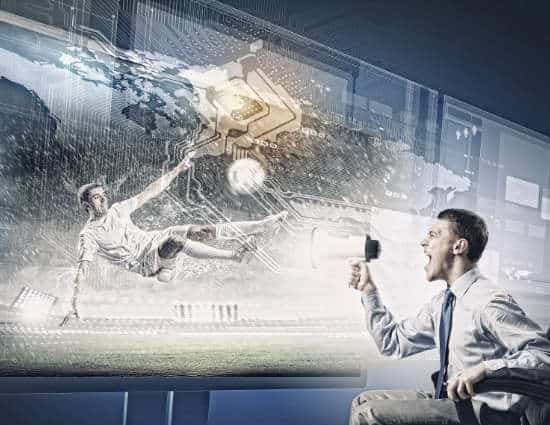 I watched my business partner dissect Sunday’s match with surgical precision. Every misplaced pass. Every tactical error. Every moment a professional athlete “should have” done something different. He had it all figured out, sitting there with his coffee, twenty-four hours and several replays after the fact.
“I could have made that pass,” he said.
No, you couldn’t have. None of us could have. But we’ve all said it.
When did we become better at football than people who’ve trained since childhood? When did we gain the authority to declare what was “obvious” from our sofas? When did the gap between professional athletes and keyboard warriors shrink to nothing?
It didn’t. What changed was where we watch from.
The Invisible Revolution
In 1992, the Premier League was born. Not from sporting necessity, but from television money. The “Big Five” clubs met with London Weekend Television’s managing director over dinner in 1990, and the blueprint was simple: more TV, more money, more control.
What followed was the most successful hijacking in sports history. Average attendance in that first Premier League season was 21,126. Today? Over 40,000. Stadiums are 98.7% full. But here’s what the numbers hide: the game moved.
The Premier League is now broadcast to 643 million homes across 212 territories. An average match pulls 12 million TV viewers globally. The math is brutal – for every person in the stadium, there are 300 watching on screens.
The game didn’t leave the stadiums. The stadiums became the minority experience.
Between the late 1990s and early 2000s, satellite technology exploded. Sky Sports. BT Sport. Amazon Prime. Suddenly, you didn’t need to be there. You could watch from anywhere. In perfect HD. With instant replay. Multiple angles. Expert analysis. Tactical cameras showing you things the human eye can’t see from the stands.
We thought we were seeing more. We were seeing less.
What The Screen Steals
The whole pitch. At the stadium, you see everything. The striker making a run thirty yards from the ball. The defensive line stepping up. The midfielder pointing, organizing, creating space no one will credit him for. You see the shape. The gaps. The intelligence happening everywhere simultaneously.
On TV? You see what the director shows you. Usually: the ball, the player with the ball, and about fifteen yards of radius. When that killer pass arrives, it looks like magic. At the stadium, you watched it develop for thirty seconds. You saw the pass before it was made.
The physical reality. Television flattens everything. Speed looks manageable. Distance looks smaller. The ball looks soft. You cannot comprehend how fast Kylian Mbappé actually moves until you see him in person. You cannot understand the power in a Kevin De Bruyne cross until you hear it. Watch on TV and you think, “I could do that.” Stand pitch-side and you realize you’d be hospitalized.
The noise. Ben Foster, former Watford goalkeeper, described what TV viewers miss: the cacophony. Seventy thousand people creating a wall of sound. Your teammate shouting instructions you can barely hear. The opposition fans right behind you, screaming. The pressure is physical. It vibrates through your chest.
From your living room, the crowd is ambient noise. Easily muted.
Time. This might be the cruelest theft. On TV, you get replays. Slow motion. Freeze frames. Five different angles. Infinite time to judge a decision that was made in 0.3 seconds while running at full speed with someone kicking your ankles.
The pundits pause the frame. “Look, he’s clearly offside.” They draw lines on the screen. They measure pixels. They spend three minutes analyzing what the player had three-tenths of one second to execute. Then they call it an “obvious” mistake.
At the stadium, you see it once, in real-time, from one angle, while breathing and blinking like a human. You’re far more forgiving.
The collective vs. the consumer. When you’re in the stadium, you’re part of something. You and 40,000 others, living the same ninety minutes. Your mood affects the player’s mood. Your roar pushes the ball toward the goal – genuinely, studies on home advantage confirm this.
On TV, you’re consuming a product. Alone, or with a handful of people. You’re not participating. You’re judging. You’re critiquing. You’re a customer who paid for entertainment and isn’t getting enough value.
The relationship changed from participant to critic.
The human scale. On screen, they’re pixels. Commodities. Brands. Content. In person, you see they’re just humans. Sweating. Limping. Exhausted. Trying their best under impossible conditions. Making mistakes because they’re mortal, not because they’re incompetent.
The screen gave everyone an opinion. And made everyone believe their opinion was valid.
What This Created
VAR exists because of television. Full stop. Would we demand frame-by-frame adjudication of offside calls if we only watched live at stadiums? Never. VAR is TV scrutiny made policy.

Pundits exist because of television. Someone needed to fill airtime before, during, and after matches. Now we have an entire industry of people paid to have opinions, generating more opinions, feeding social media opinions, creating an infinite loop of judgment.
Financial rewards exploded because of television. Premier League clubs generated £5.3 billion from foreign TV deals in 2022, surpassing domestic revenue. Players are paid by TV money, not ticket sales. When TV money is threatened, everything shakes.
The rule changes serve television. Kick-off times moved for TV scheduling. The Premier League has 10 different ways to watch matches across different streaming platforms – because TV fragmented into digital. The game bends to serve the screen.
Social media turned everyone into pundits. After every match, young players check Instagram and Twitter to see what strangers said about them. Chris Turner, former Manchester United goalkeeper, offers stark advice:
“Stay off social media. After every big match, players can be targeted for mistakes. Back in my day, you had to develop mental toughness to handle setbacks. Today, clubs have welfare officers and social media managers, but my advice remains the same: stay away from social media, ignore the criticism, and focus on your game.”
The fun disappeared. Everything became too serious. Every mistake analyzed to death. Every tactical choice questioned. Every player’s value reduced to statistics. Football became content to be optimized, not a game to be enjoyed.
And it all traces back to the same root cause: we stopped watching together, in person, with limited information and human perspective. We started watching alone, on screens, with infinite replay and inhuman expectations.
Your Business Is On TV
You’re doing the exact same thing.

You think you’re running your business because you check the dashboard every morning. Revenue. Conversion rates. Customer acquisition cost. Average order value. Click-through rates. You’ve got metrics for everything.
You’re watching your business on TV.
You’re missing the spatial intelligence. Your dashboard shows you isolated metrics – the ball, basically. You’re not seeing the warehouse worker who’s developed a workaround for your terrible inventory system. You’re not seeing the customer hesitate before clicking “buy” because your checkout flow confuses them. You’re not seeing the sales team member who’s carrying three others. You’re not seeing the quiet dissatisfaction brewing in customer service.
The dashboard shows you what someone decided was important. Like the TV director showing you the ball. The whole pitch is invisible.
You’ve lost touch with difficulty. From your screen, everything looks easy. “Why didn’t they close that sale?” Because you’re not in the room where it’s happening. You’re not feeling the pressure of the moment. You’re not dealing with the customer who’s had a terrible day and is taking it out on your team member. You’re not navigating the real-time chaos.
You’re freeze-framing their performance and judging it with unlimited time and zero context. Just like armchair football experts.
You’re drowning in analysis paralysis. You’ve got so much data. A/B test results. Heatmaps. Customer journey analytics. Session recordings. You can scrutinize everything frame-by-frame. So you do. And you find problems everywhere. Tiny problems. Problems that might not even be problems in the flow of real business.
Meanwhile, the big picture – the shape of your business, the morale of your team, the quality of your actual product – gets ignored because it doesn’t show up in Google Analytics.
You’ve lost the collective. Remote work. Zoom calls. Slack threads. Everyone consuming the business individually, from screens, in isolation. Nobody experiencing it together. Your team isn’t in the stadium anymore. They’re all watching different feeds of the same game, forming different opinions, losing the shared reality that made the business coherent.
You’re seeing curated narrative, not reality. Your CRM tells a story about your customers. Your project management software tells a story about your team’s productivity. Your financial software tells a story about your health. These are useful stories. They’re also fictions. Carefully curated presentations of selected data points. Reality is messier, more complex, more human, and completely invisible to your screen.
You’ve forgotten they’re human. Your employees are Slack avatars. Your customers are data points in a CSV file. Your suppliers are email addresses. The screen mediated everything, and in the process, stripped away the humanity. You forgot that they’re tired, stressed, trying their best, making mistakes because they’re mortal.
From the screen, they’re just not performing well enough. Fire them. Optimize them. Replace them.
Get To Your Stadium
The prescription isn’t complicated. Stop watching your business on TV.
Go to where the work actually happens. Not the boardroom. Not the executive floor. The shop floor. The customer service desk. The warehouse. The delivery route. The checkout counter. Stand there. For hours. Watch.
 See the whole pitch. Watch how the parts connect. Notice what your dashboards miss. The informal workflows. The unspoken tensions. The small inefficiencies that compound. The quiet stars nobody credits. The gaps in your systems that real humans are filling with improvisation.
Experience the difficulty yourself. Take customer service calls. Pack orders. Run the checkout process as if you’re a customer. Sit in on sales pitches. Do the thing before judging the thing. Feel the pressure. The time constraints. The impossible standards. The gap between what the system promises and what reality delivers.
Stop playing everything back in slow motion. Someone made a decision. It didn’t work perfectly. You can spend three hours analyzing why, drawing lines on spreadsheets, measuring the deviation from optimal. Or you can recognize that they made it in real-time with incomplete information under pressure, and it was probably the best option available in that moment.
Rebuild the collective. Get your team in the same room. Regularly. Not for meetings. For work. So they experience the business together instead of consuming it individually. The stadium matters. The shared space matters. The group consciousness matters.
Trust reality over reports. If your dashboard says customer satisfaction is high but you walk the floor and hear complaints, trust the floor. If your metrics say productivity is up but you talk to your team and feel exhaustion, trust the exhaustion. The map is not the territory. The screen is not the reality.
Remember they’re human. Every frustration you have with an employee’s performance – ask yourself if you’d have it standing next to them, watching them work, seeing them as a complete human being. Or if it only exists from the distance of a screen.
Here’s what this isn’t: you still need the data. The dashboards matter. The metrics are useful. Just like TV broadcast stats and tactical cameras add value to football. This isn’t about choosing stadium over screen.
It’s about recognizing that you’ve gone 90% screen, 10% stadium. And it needs to flip.

The Beautiful Business
Football is still beautiful. When you’re there. When you see it whole. When you remember it’s humans playing, not algorithms executing.
Your business can be beautiful too. But not from behind a screen.
This week, leave your desk. Close the dashboard. Turn off Slack. Go to your stadium – wherever the real work happens in your business. Spend a full day there. Don’t audit. Don’t inspect. Just watch. See what you’ve been missing.
See what the screen stole from you.
And maybe, if you can, go to an actual football match too. In person. Let yourself remember what it feels like to experience something fully, without a director choosing what you see. To be part of something instead of consuming it. To judge with human eyes instead of HD replay.
You’ll understand everything differently.
The screen changed everything. And not always for the better.